
On the Motivation to Practice for Music Lessons
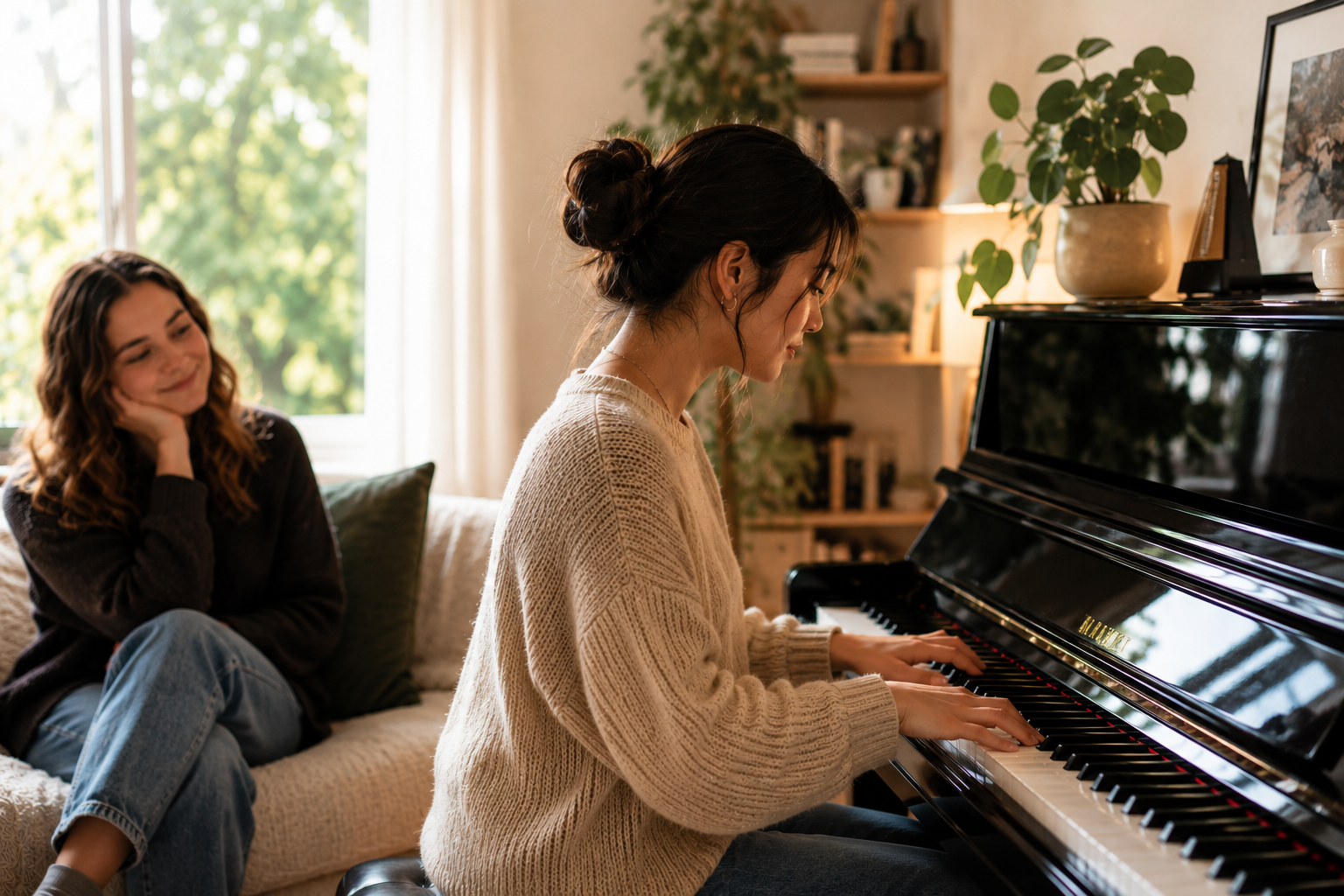
You may hear your teacher tell you that practice is the number one thing that helps you improve. And this is true- singing or playing piano in lessons is great for learning where you need to grow and strategies and exercises for growing.
But the growth doesn’t always happen in the studio. When you’re at home, you have the time and space to try things over and over again, which is necessary to build muscle memory and make your instrument easier to use.
However, it’s not always easy to be motivated at home, when you have other options for how to spend your free time; so here are a few strategies I use to keep the interest up!
Practice because there’s nothing else to do.
For this strategy, you give yourself external constraints around other uses of time. Unplug the TV, hide your phone away, sit at the piano and just sit there for a decent length of time, up to a few hours even. Eventually, with nothing else to do, boredom will take over the motivation. The key here is to make the deal with yourself that it’s still a success even if you sit at the piano for a whole hour and don’t play or sing a single note– that way there’s no pressure, it’s just the available activity.
Practice to avoid something else.
This strategy works well if you have something else that’s important but not necessarily urgent to take care of, like a big pile of dishes or an assignment with an upcoming (but not immediate) deadline. The desire to procrastinate chores reminds one that music is a pleasurable activity, not a chore!
Create a low stakes performance
If you’re in need of a bit more pressure to get going, schedule a small performance; just invite a few friends over and ask if they’ll listen to whatever you’re working on at the time. It gives a bit of a deadline but isn’t as stressful as a large public performance, and provides something tangible to prepare for.
With these strategies, on top of all the classics like scheduling specific practice time, rewarding yourself after, and having music you’re inspired to work on, you’ll have a great toolkit of practice motivations!
written by: Jaz Jendersee