
Creative After-School Ideas to Expand Your Child’s Horizons Today
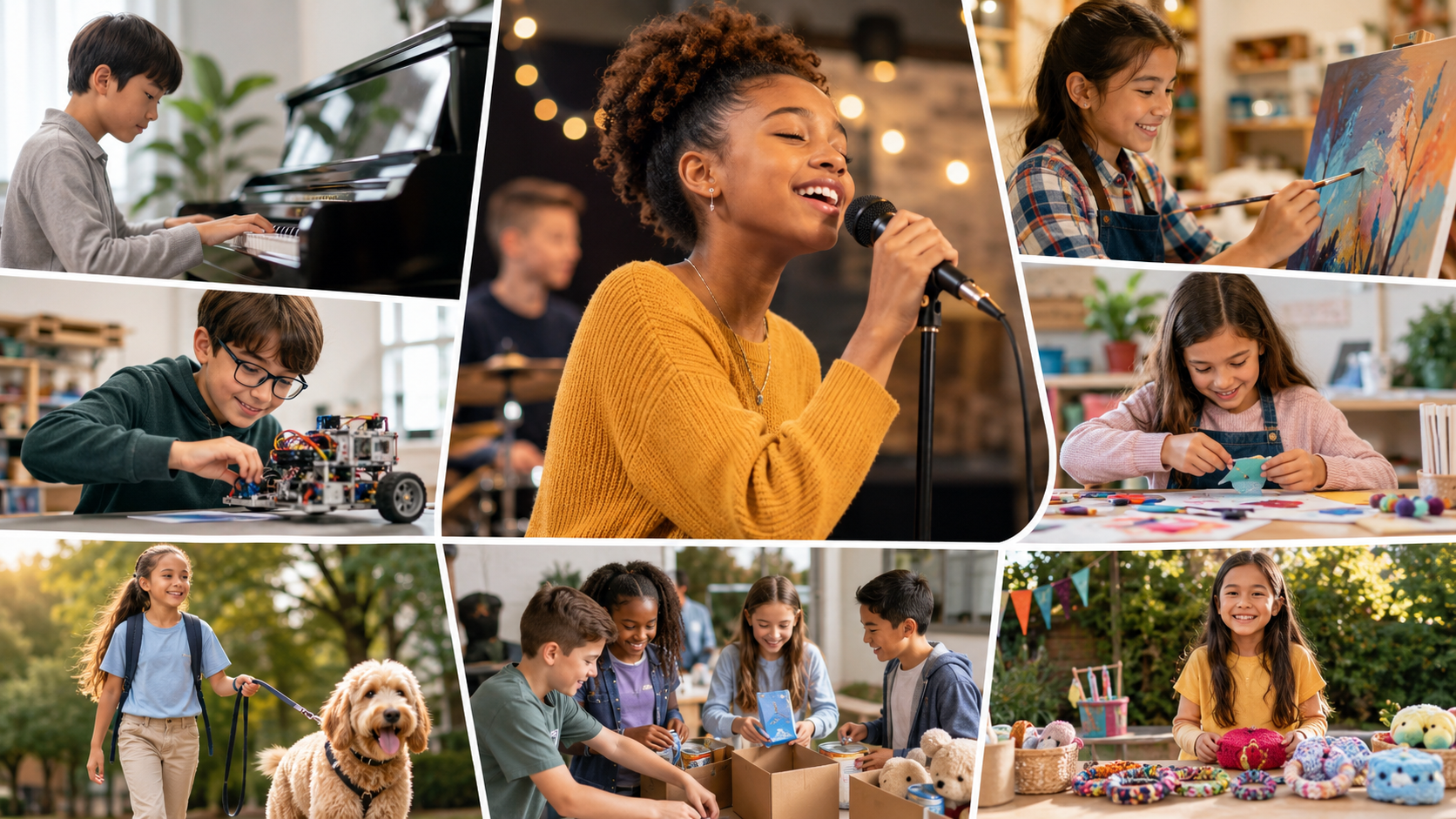
Choosing the right after-school activity can feel overwhelming. Every parent wants to find something their child genuinely enjoys, an activity that builds confidence, encourages creativity, and gives them something to look forward to each week. But when an activity becomes "just something to fill the hours," it can lose its spark. The best enrichment programs inspire curiosity, foster independence, and help children develop confidence and real-world skills while having fun.
Launch a Kid-Run Microbusiness in 30 Minutes
If your child’s current after-school routine feels a little blah, a tiny entrepreneurship project can add purpose fast. Teen entrepreneurship is a productive way to spend that time because it turns ideas into real-world practice, confidence, communication, and leadership, without needing a huge commitment. Simple microbusiness ideas include dog walking, tutoring younger kids, lawn care, baking treats for neighbors, or selling handmade crafts. To make it feel official, try to create a logo with an online logo maker: pick a ready-made template, then tweak the fonts and colors until it matches your child’s vibe. Next up, we’ll compare a range of creative after-school paths so you can choose what fits best.
After-School Paths Compared at a Glance
This quick table compares a few creative after-school directions so you can match your child’s interests with the right kind of growth. A clear fit matters because consistency is what turns a “cool idea” into skills, friendships, and confidence, and after-school program attendance has been linked with positive youth outcomes.
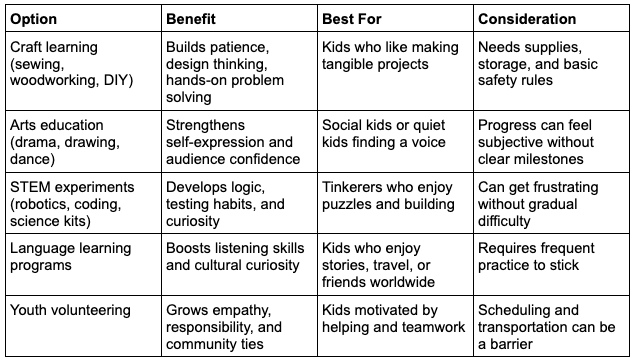
If your child likes quick feedback, STEM or crafts can feel rewarding fast. If they crave connection, arts or volunteering often provides a built-in community. Pick the option that matches your child’s energy and your weekly bandwidth, and you will feel confident sticking with it.
Try Music Lessons That Build Skills You Can Hear
With your shortlist in hand, consider an option that turns practice into something you can actually listen to. At Vocals on Stage, we've seen music transform children in so many ways. Beyond learning to sing or play the piano, students develop confidence, discipline, creativity, and a sense of accomplishment that carries over into school and everyday life. Whether your child is a complete beginner or already has experience, lessons are tailored to their individual goals and interests.
Make It Stick: A Simple Parent Support Plan
A new hobby doesn’t need a big overhaul to become part of your routine. A few small systems, simple choices, tiny commitments, and a low-friction setup, can help your child actually stay with creative after-school activities.
Start with a 2-Week “Sampler,” Not a Forever Decision: Pick one activity and commit to trying it for two weeks (or two sessions), then reassess together. This works because it lowers pressure, kids can focus on showing up instead of proving they’re “good” at it. For music lessons, that might mean two short piano sessions at home plus one beginner lesson, with the goal of learning one recognizable melody or rhythm pattern.
Use a “Menu of Three” to Give Real Choice (Without Overwhelm): Offer three options you’re genuinely okay with, one familiar, one slightly new, and one wild card, and let your child choose. Choice increases buy-in, but too many options can stall momentum, so keep it tight. Example: “voice warm-ups + a song,” “drawing a comic strip,” or “beginner coding puzzles,” then ask, “Which one feels doable today?”
Make the First Step Ridiculously Easy: Decide what “starting” looks like and shrink it to 2–5 minutes. Put the instrument on a stand, lay out the sketchbook on the table, or keep the craft bin in one grab-and-go spot, anything that removes set-up friction. The goal is to get your child into motion; once they begin, it’s much easier to continue for 15–20 minutes.
Build a Tiny Routine Around an Existing Anchor: Attach the activity to something that already happens, snack time, right after homework, or before screen time. Consistency helps skill development because practice becomes automatic, like brushing teeth, instead of a daily negotiation. Try “Tues/Thurs: 15 minutes right after snack,” which matches the steady, week-to-week progress you see in beginner music practice.
Praise the Process, Track the Proof: Skip “You’re so talented” and aim for specific, effort-based encouragement: “I noticed you kept the beat steady,” or “You tried three ways to shade that drawing.” Then keep simple proof of progress, a short audio recording once a week, a folder of sketches, a photo of finished builds. Seeing improvement (even tiny) is motivating, especially when kids hit the normal “this is hard” phase.
Plan for the Wobble: Create an If–Then Backup: Assume there will be tired days and make a gentle fallback plan ahead of time. “If you’re not up for a full practice, then do the 3-minute version,” like one scale, one chorus, or one quick doodle prompt. This keeps the habit alive without turning creative time into a battle.
Growing Confidence and Connection Through One New After‑School Choice
If your child has been curious about singing or piano, a trial lesson is a wonderful way to explore their interests in a fun, supportive environment. At Vocals on Stage, our goal is to help every student build confidence, develop musical skills, and discover the joy of making music. We'd love to welcome your family for a trial lesson.
written by: Aimee Lyons